9 Rapid Prototyping
22.1 Introduction
Rapid prototyping is an essential part of the mechanical product design process, as it allows designers to test and evaluate their ideas, communicate with stakeholders, and refine their solutions. Additive Manufacturing is a process used for rapid prototyping which enables the creation of 3D objects built layer-by-layer using Computer Aided Design (CAD) software. In this chapter we will look at why prototyping is important when making new items, how additive manufacturing can be used in prototyping, and some of the machines that are used in prototyping.
22.2 Learning Objectives
By the end of this chapter you will be able to:
- Say how additive manufacturing can be used in prototyping
- Why prototyping is important when making new items
- Different machines that are used in prototyping
22.3 About Prototyping
A prototype is a representation of a design that serves a specific purpose; to test a hypothesis or assumption about the design problem. Depending on the nature of the question that needs to be answered, different types of prototypes can be more or less suitable. In this section, we will discuss how to choose the right type of prototype for each stage of the design process, and what are the advantages and limitations of each type. One way to classify prototypes is by their format, or how they represent the design idea in a tangible or intangible way. There are three main formats of prototypes:
- Physical prototypes: These are real objects that mimic the appearance, functionality, interaction, and fabrication aspects of the design. Physical prototypes can be used to evaluate how the design fits in the context of use, how users interact with it, how it performs its intended functions, and how it can be manufactured and assembled.
- Sketches, layouts, and diagrams: These are two-dimensional drawings that illustrate the design concept from different perspectives. Sketches, layouts, and diagrams can be used to communicate the overall idea, the system architecture, the information or material flow, and the comparison between different alternatives.
- Digital and computational models: These are mathematical or computer-based representations of the design that capture its behavior, performance, or optimization. Digital and computational models can be used to explore the design space, to analyze the trade-offs between different parameters, to simulate the outcomes under different scenarios, and to optimize the design for specific criteria.
Additionally, we can characterize prototypes by their primary function or type of hypothesis they can address. These are listed generally in order of stages in the design processes.
- Proof-of-concept prototype: This type of prototype is used to test the feasibility of a concept or idea. It is usually a simple model that demonstrates the basic functionality of the product.
- Form study prototype: This type of prototype is used to explore the physical appearance and aesthetics of the product. It is usually a non-functional model that helps designers to visualize the product.
- User experience prototype: This type of prototype is used to test the usability and user experience of the product. It is usually a functional model that simulates the interaction between the user and the product.
- Functional prototype: This type of prototype is used to test the functionality of the product. It is usually a working model that demonstrates the key features and performance of the product.
- Pre-production prototypes: These are the final prototypes that are made with the same materials, processes, and specifications as the mass-produced product. They can be used to validate the manufacturing and assembly plan. They can also be used to verify the quality and consistency of the product, and to prepare for the transition to production. They may also be used for marketing or regulatory purposes.
Prototyping is not a trivial task and it requires careful planning and justification. Depending on the type of prototype, the expense to develop can be very high and therefore needs a good justification. The type of prototype developed depends on the overall objective of the project and the stage of the design process. Some possible justifications for developing a prototype are:
- Validating a concept, physical phenomenon, or user experience: A prototype can be used to test whether the underlying idea or principle of the solution is sound and viable. For example, a prototype can be used to verify if a certain material can withstand a certain stress level, or if a certain interface can provide a satisfactory user experience.
- Securing feedback and buy-in from stakeholders: A prototype can be used to communicate the vision and value proposition of the solution to the potential users, customers, investors, or partners. A prototype can help elicit feedback and suggestions from the stakeholders, as well as generate interest and support for the project.
- Exploration of design parameters: A prototype can be used to explore different aspects of the solution, such as the size, shape, color, functionality, performance, cost, etc. A prototype can help identify the optimal design parameters that can meet the requirements and constraints of the project.
22.4 3D Models/CAD Models to Physical Prototypes
3D printers use coordinate points from a CAD model, convert those coordinate points into a computer program using G-code, and, using that data, move the tool head in the specified pattern that creates the solid object.
Additive manufacturing (AM) is a process of creating three-dimensional objects by adding material layer by layer, following a digital model. AM can be used for both full-scale production and prototype development, depending on the design,
material, and application. AM offers several advantages for prototyping, such as speed, flexibility, and cost-effectiveness.
22.5 3D printing
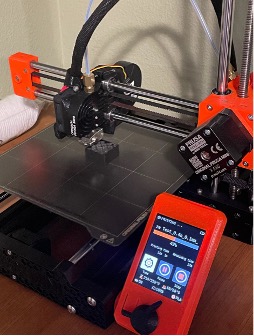
Some of the common technologies for prototype manufacturing using AM are:
Fused Deposition Modeling
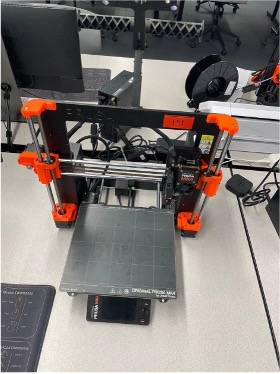
Fused Deposition Modeling (FDM): Extrusion, which is typically known as Fused Filament Fabrication (FFF) or Fused Deposition Modeling (FDM), begins by slicing 3D CAD design into layers. It is a widely known and used additive manufacturing process in which a nozzle extruding molten plastic builds a 3D part layer by layer, until the final geometry is obtained. A broad application spectrum can be achieved from small to large, from simple to complex, from personal fabrication to a professional one such as tooling, jigs and fixture and mold production.
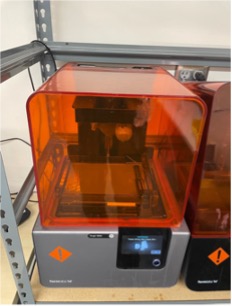
Stereolithography (SLA)
Stereolithography (SLA): This technology uses a laser beam to selectively cure liquid resin into solid layers, creating high-resolution and smooth-surfaced models. SLA is suitable for prototyping complex geometries and fine details that require accuracy and aesthetics.
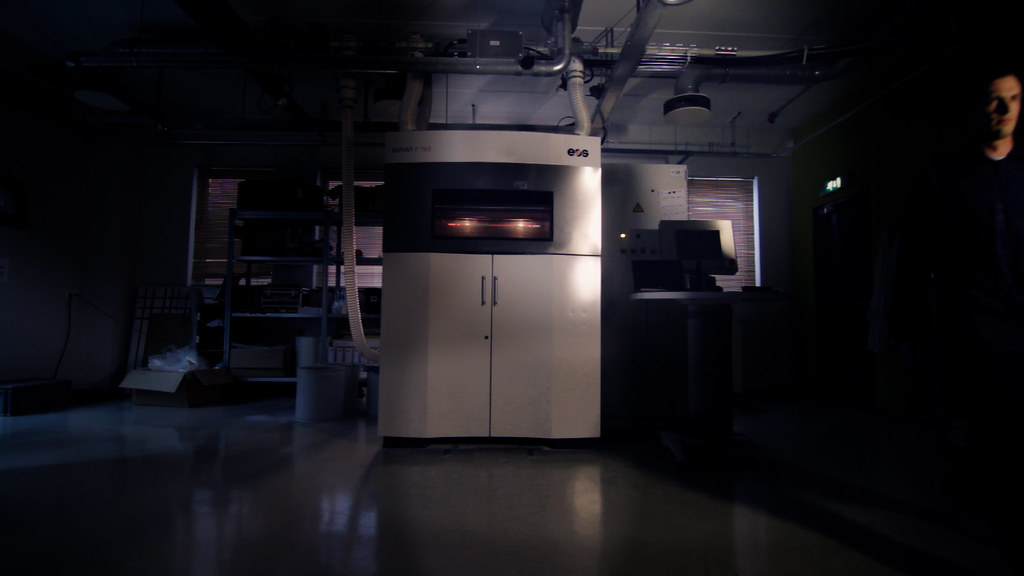
Selective Laser Sintering (SLS)
Selective Laser Sintering (SLS): This technology uses a laser beam to fuse powdered material, such as nylon or metal, into solid layers, forming dense and robust parts. SLS is suitable for prototyping parts that require high mechanical performance and thermal resistance.
22.6 Laser cutting
Subtractive manufacturing is a process that removes material from a solid piece of raw material to create a desired shape or form. Subtractive methods are widely used in traditional or mass manufacturing, such as machining, cutting, drilling, and carving. However, some subtractive technologies are also suitable for rapid prototyping.
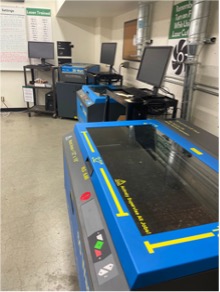
Laser Cutting: Uses a high-powered beam of light to cut through various materials, such as metal, wood, plastic, and paper. Laser cutting can produce precise and complex shapes with smooth edges and fine details. Laser cutting is also fast and efficient, as it can cut multiple layers of material at once. A similar approach is water jet cutting.
22.7 Desktop Milling, Drilling, and Turning
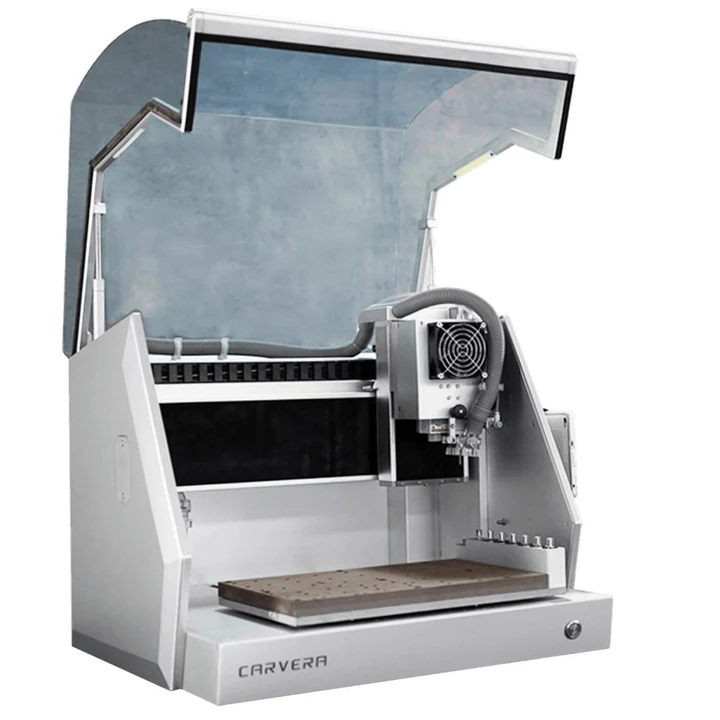
These are small-scale versions of the machining processes that use rotating tools to remove material from a workpiece. Desktop milling, drilling, and turning can be used for small batch production of prototypes that require high accuracy and quality. These processes can work with different materials, such as metal, wood, plastic, and composite. Compared to production CNC mills, small-scale desktop prototype CNC mills have lower ridgity and lower power spindle motors. Because of this, small-scale desktop prototype CNC mills are more suitable for softer materials like plastic and wood. Aluminum can be milled in some small-scale desktop prototype CNC mills, but harder materials such as steel are difficult to mill in these machines.
22.7 Chapter summary
Prototyping is an essential stage in the mechanical product design process, as it allows designers to test and evaluate their ideas, identify and solve problems, and communicate their concepts to stakeholders. One of the most widely used prototyping generating technologies is Additive Manufacturing (AM), which is a process of creating objects by depositing layers of material on top of each other. AM offers many advantages for prototyping, such as speed, flexibility, customization, and complexity. By leveraging additive manufacturing methods such as FDM, SLA, SLS as well as subtractive methods like laser cutting the product design, evaluation, and finalizing with stakeholders can occur faster and more seamlessly than ever before.
22.8 References
Razavykia, Abbas, et al. “An Overview of Additive Manufacturing Technologies – A Review to Technical Syntheses in Numerical Study of Selective Laser Melting.” National Library of Medicine, PubMed Central, 2020, https://pmc.ncbi.nlm.nih.gov/articles/PMC7504540/. Accessed May 2 2025.
Jourden, Matthew. “3D Printing, Computer Aided Design (CAD) and G-Code Basics.” Teach Engineering, Michigan State University, 2019, https://www.teachengineering.org/activities/view/mis-2342-3d-printng-computer-aided-design-g-code-basics. Accessed May 2 2025.
Downey, Allen. “Physical Modeling in MATLAB.” Green Tea Press, Green Tea Press, 2012, https://greenteapress.com/wp/physical-modeling-in-matlab/. Accessed May 2 2025.
Jourden, Matthew. “3D Printing, Computer Aided Design (CAD) and G-Code Basics.” Teach Engineering, Michigan State University, 2019, https://www.teachengineering.org/activities/view/mis-2342-3d-printng-computer-aided-design-g-code-basics.
Jensen, David. “Introduction to Mechanical Design and Manufacturing.” University of Arkansas, 2025, https://uark.pressbooks.pub/mechanicaldesign/. Accessed 5 2 2025.
Jourden, Matthew. “3D Printing, Computer Aided Design (CAD) and G-Code Basics.” Teach Engineering, Michigan State University, 2019, https://www.teachengineering.org/activities/view/mis-2342-3d-printng-computer-aided-design-g-code-basics. Accessed May 2 2025.
Crease, Alex. “Laser Cutting Basics.” Instructables, 2015, https://www.instructables.com/Laser-Cutting-Basics/. Accessed May 2 2025. Downey, Allen. “Physical Modeling in MATLAB.” Green Tea Press, Green Tea Press, 2012.
Jensen, David. “Introduction to Mechanical Design and Manufacturing.” University of Arkansas, 2025, https://uark.pressbooks.pub/mechanicaldesign/. Accessed May 2 2025.
Jourden, Matthew. “3D Printing, Computer Aided Design (CAD) and G-Code Basics.” Teach Engineering, Michigan State University, 2019, https://www.teachengineering.org/activities/view/mis-2342-3d-printng-computer-aided-design-g-code-basics. Accessed May 2 2025.
Media Attributions
- 3D printer © Chris W is licensed under a CC BY-SA (Attribution ShareAlike) license
- 3D printer 2 © Chris W is licensed under a CC BY-SA (Attribution ShareAlike) license
- SLA printer © Chris W is licensed under a CC BY-SA (Attribution ShareAlike) license
- SLS Printer is licensed under a CC BY-NC-ND (Attribution NonCommercial NoDerivatives) license
- laser cutter © Chris W is licensed under a CC BY-SA (Attribution ShareAlike) license
- Carvera-Desktop-CNC-Machine-Carvera-30812-2-1_e326fef8-a204-4183-9033-0b678d519a28 is licensed under a CC BY-NC (Attribution NonCommercial) license